CIS3250: Ethics and Computer Science
Rebuilt FSU's computer science ethics course from the ground up in 2020 and have run it for thousands of FSU students across four campuses since. SACS- and ABET-accredited.
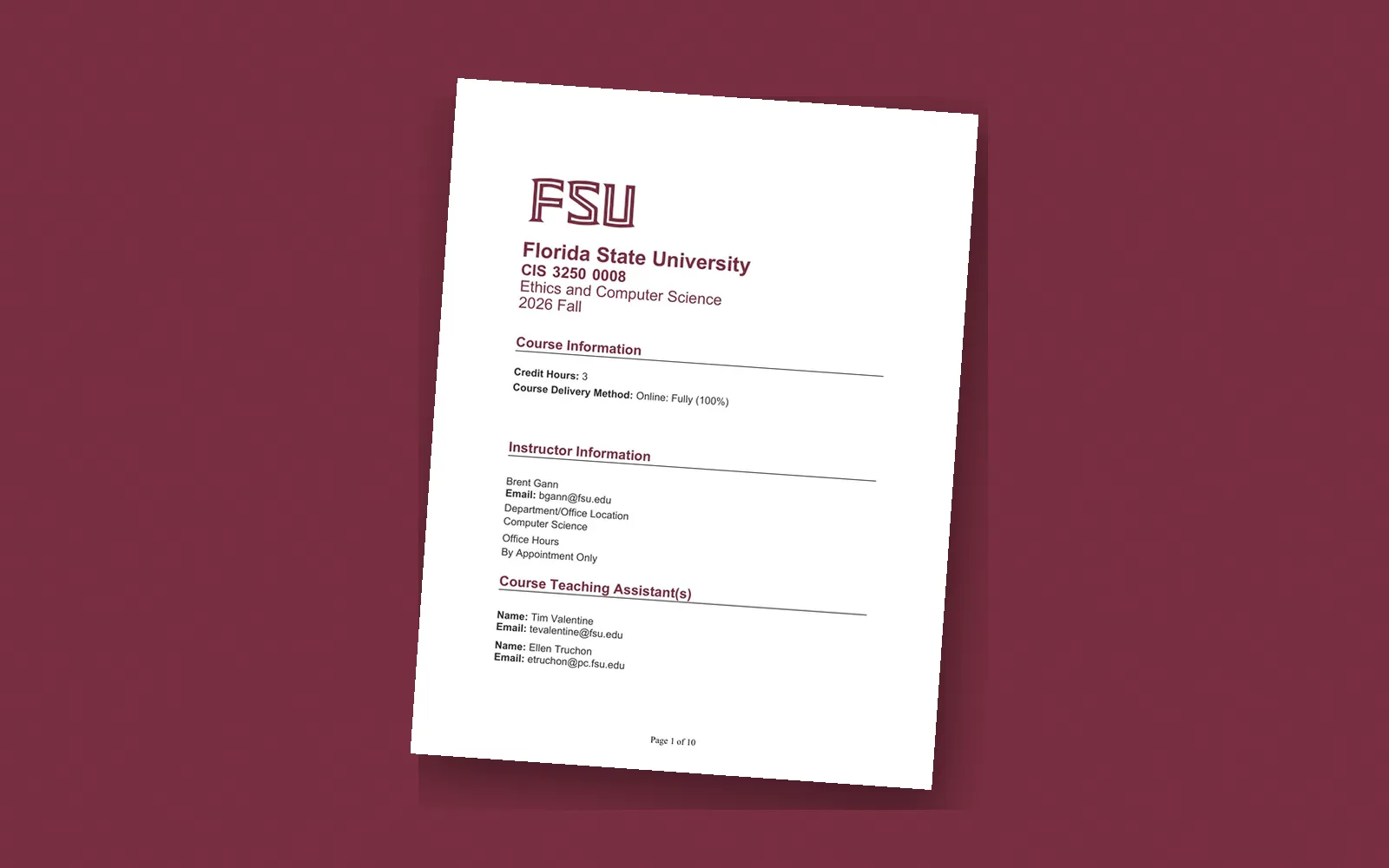
CIS3250 is the ethics requirement in Florida State’s computer science bachelor’s degree, so it’s one of the few courses every CS graduate takes. When I took it over in 2020 I developed an entirely new course and chose the textbook it runs on. Ten modules: ethical theory, ethics for IT workers, cybersecurity, privacy, freedom of expression, intellectual property, ethical decisions in software development, the impact of IT on society, social media, and the ethics of IT organizations.
Assessment has to hold up at scale and under accreditation. Weekly quizzes and case-study discussions carry the modules, two proctored exams carry the theory, and a term paper asks each student to argue a position on a current issue using the analysis methods from the course, with attention to the local and global impact of computing and how a professional code of ethics applies. Those are the outcomes SACS and ABET accredit against.
It has run for thousands of FSU students across the Panama City, Florida, Panama City, Panama, and Tallahassee campuses, with Valencia added in fall 2026. At that size the job is mostly course engineering: consistent module and exam windows, discussion prompts a team can grade fairly, and a start-of-term checklist that catches the defects a copied course shell reintroduces every semester. That checklist lives in the Claude skill library.