Ethics Speed Run
A one-hour ethics workshop for a software company, built from the university course: definitions, three cases (Therac-25, 'Ethics, Schmethics', Google Street View), and rapid-fire questions about the product decisions the room actually makes.
Teaching CIS3250 means I carry a semester of ethics material around, and in January 2025 I compressed it into an hour for the product and engineering teams at Enable. Not a lecture on ethical theory. The goal was to give a room of people who ship software a shared vocabulary and then make them use it on their own decisions.
Three parts. Definitions first, because most arguments about ethics at work are two people using the word to mean different things: ethics as the code of the group, morals as the individual’s principles, virtue and vice as habits. Then cases, each with one discussion question. Therac-25, where a race condition in a radiation machine killed patients and the manufacturer insisted for years it couldn’t be the software, asks what organizations should do to reduce the consequences of software errors. Michael Schrage’s “Ethics, Schmethics” asks whether a business has to choose between good ethics and financial results. Google’s Street View Wi-Fi collection asks how a company weighs the data it could collect against its obligation to the people it collects from.
Then rapid fire, with questions written for that company instead of a textbook. What to do when a customer has been sold something that doesn’t exist yet on a hard timeline. Where the line is on showing unbuilt features to customers. What stewardship of data means when you’re training AI models on it. What someone with cross-tenant data access should do when they see a trend that could matter. Those got the room talking.
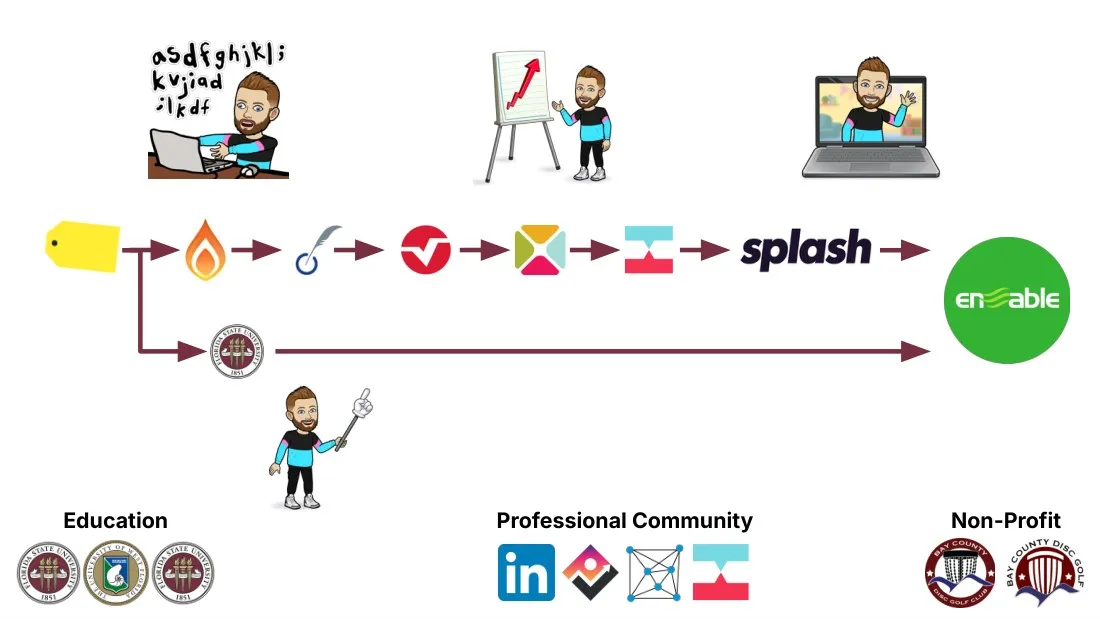
The I'm Brent slide: education, non-profit, and work as one path, because the ethics material came from all three.
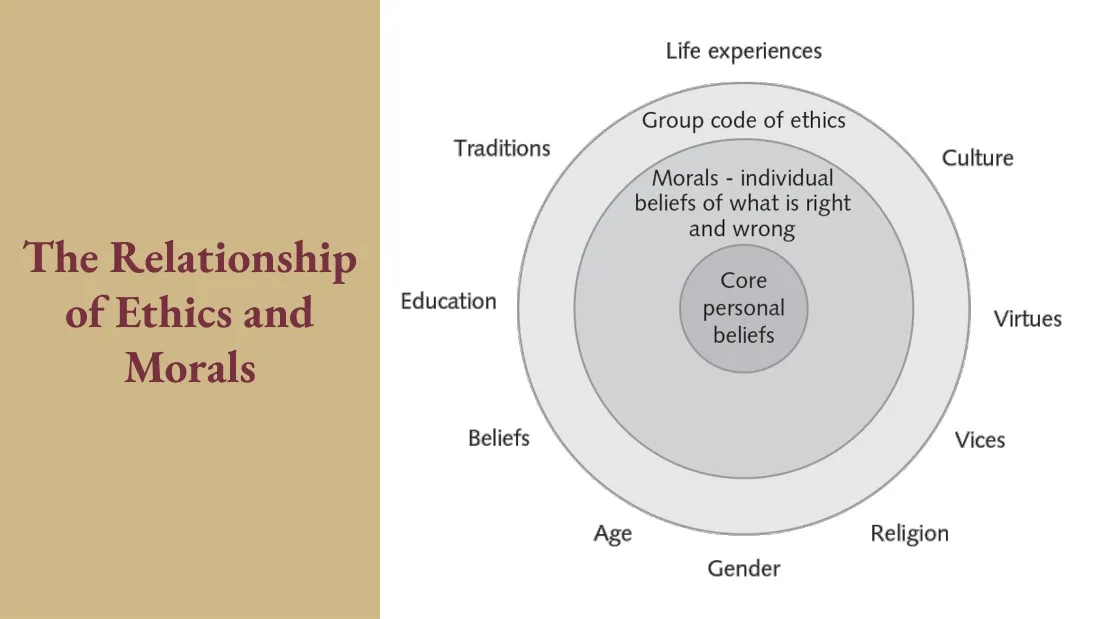
Ethics and morals as rings: the group's code around the individual's beliefs, both shaped by everything outside.
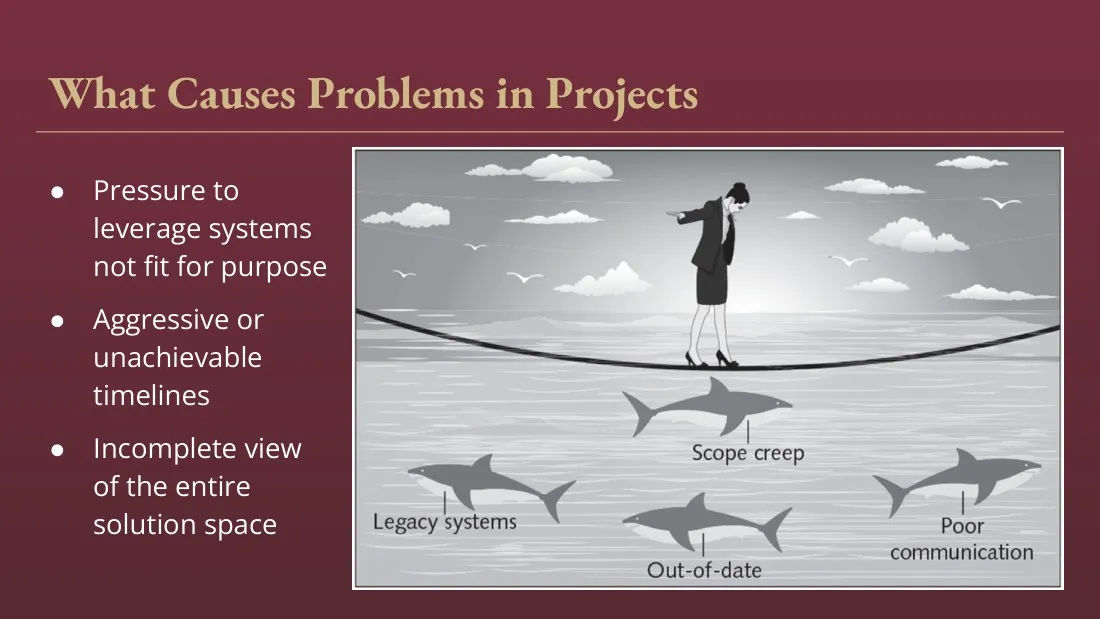
What actually causes problems in projects. The sharks have names.